🌀 The Return of YOLO in Marketing
How consumer uncertainty is reshaping where brand memory forms. And why IRL experiences are the last protected category. Plus: What Pinterest, Lululemon and Wynter understood before everyone else.
Hi 👋 I’m Florian Schleicher. This is the FutureStrategies newsletter. Thank you so much for reading along 💚
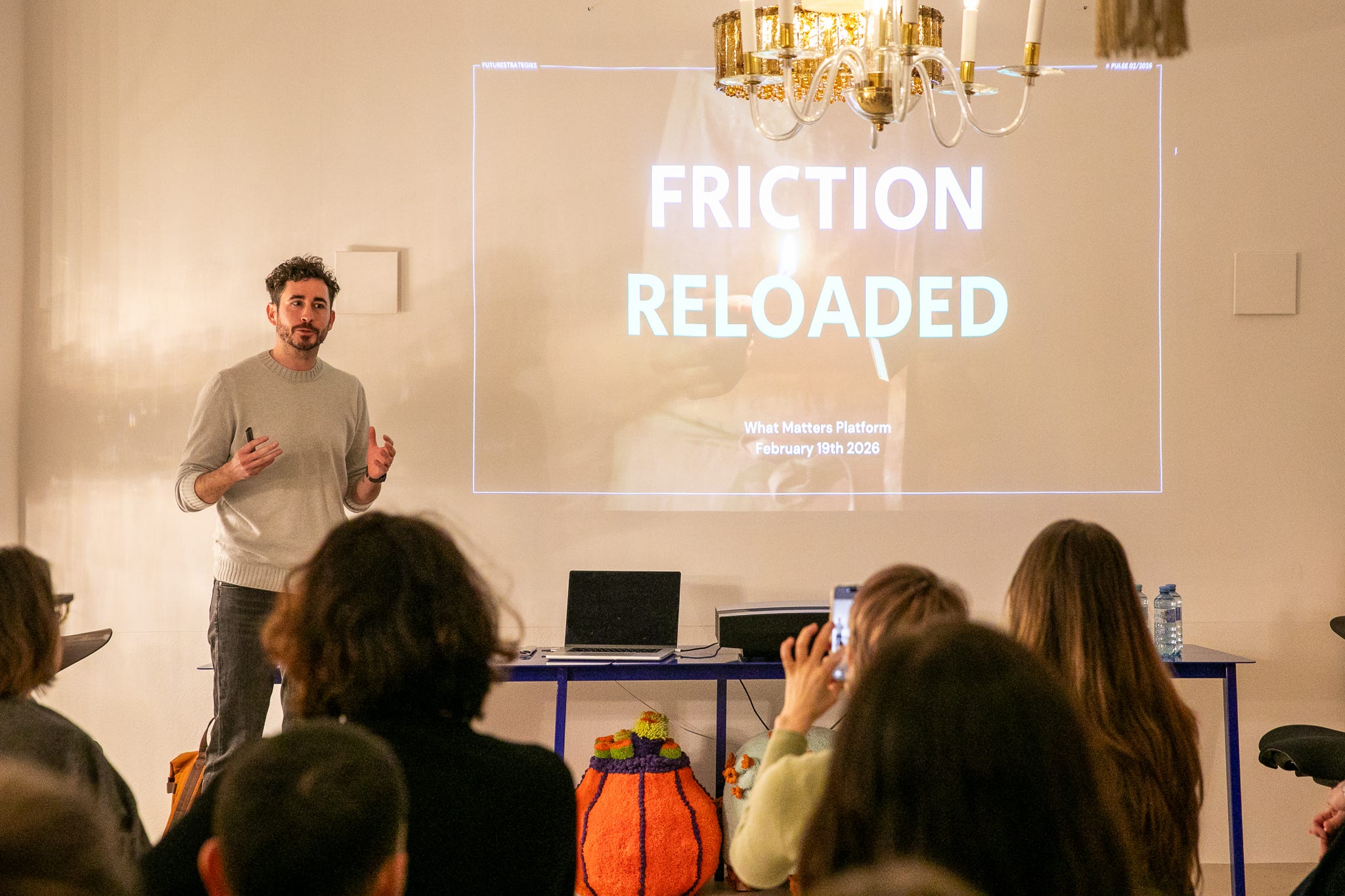
Over the last couple of months I talked at 15 events and for 10 clients about FRICTION RELOADED, my trendreport around the four shifts in consumer behaviour and the potentials for marketing they contain.
One central observation didn’t let me go…
Uncertainty and pressure are the new baseline.
Consumer confidence is at historic lows. Inflation is still biting. People are cutting back on clothes, electronics, groceries. And yet young people are travelling, concerts are selling out in minutes. Festivals are packed. Live Nation just reported 107 million tickets sold, up 11% year over year, with no slowdown anywhere, no demographic, no venue size, nothing.
That is a contradiction. And a signal.
And inside of this a term from the recent past is coming back to my mind that I have forgotten about a little: YOLO.
The original post-COVID YOLO was built on something optimistic. We survived something terrible, the world felt short and bright, spending freely felt like a celebration.
That party is over.
With crisis after crisis, war after war, AI doomsday messages everywhere and no one really knowing whether their job will still exist a couple of years from now, many are in a slight panic mode.
Yes, I am also thinking a lot about my future job as an independent strategist.
I still believe that AI can’t replace the emotional depth, the experience, the passion, the gut feeling and the ability to imagine new ways of reaching people that I have gathered over the last twenty years of working in this industry.
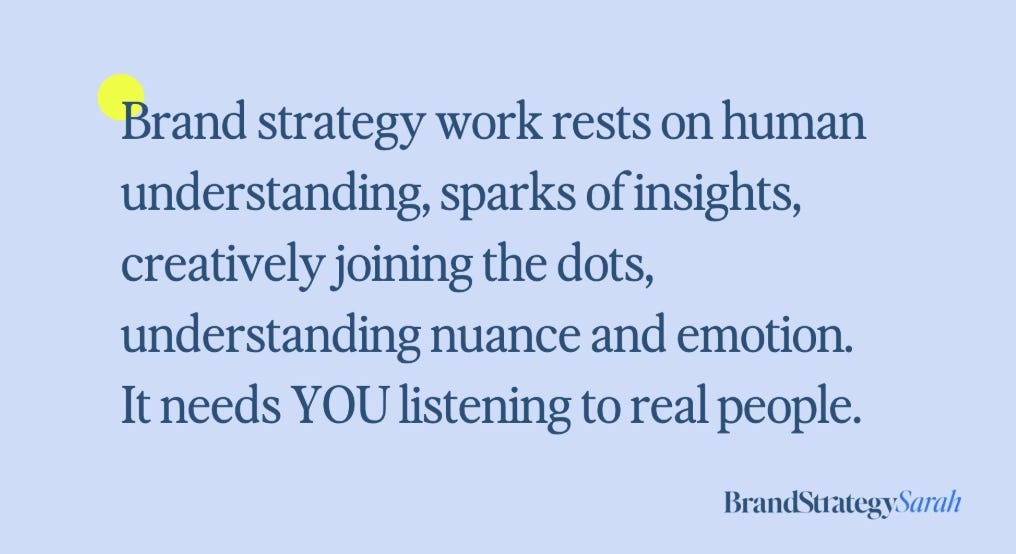
But am I sure that I will have the same job in 5 years? No, absolutely not.
And like me, many people are currently experiencing some uncertainty about their future, not just from a professional POV.
Crises are always starting points of something new.
🌀 The mutation of YOLO
What I observe now is different to that previous YOLO, and honestly way more interesting from a strategic perspective. It has split into two patterns that look similar on the surface but come from completely different psychological places.
The first is what economists are beginning to call “Disillusionomics.”
Gen Z is currently carrying an average personal debt of $94,000, more than any generation before them. Millennials know they won’t be able to afford the same as their parents (and no, it’s not the fault of obsessive avocado eating).
“The economic system their parents are talking to them about isn’t really going to work out for them in the same way.”
Alice Lassman, British Economist
At the same time, spending on entertainment and travel is growing faster than any other category, up 25.5% year over year according to Bank of America. Alice Lassman described it as a coping strategy for an uncertain and mystifying financial future. If the system is broken anyway, why defer? The logic of the original YOLO is still present, but the emotion driving it has shifted from freedom to fatalism.
This is not just a Western phenomenon: In Korea, driven by a prolonged economic recession and high exchange rates, young people are turning to digital platforms like “rooms for beggars” (geojibang) and “map for beggars“ (geojimap) to gamify their penny pinching.
Different expression, same underlying psychology:
When the future feels unreachable, you stop planning for it and start optimising the present.
The second pattern is more deliberate. People are actively trading down in categories that feel replaceable, cheaper (or second hand) clothes, fewer electronics, private label groceries, so they can protect the things that feel irreplaceable. They are making this trade-off consciously. And what they are protecting, consistently, across demographics, is experiences.
Especially live ones.
Especially shared ones.
Especially the kind you can’t watch on a screen later.
According to the Eventbrite Social Study 2026 “Reset to Real” 79% of 18-to-35-year-olds plan to attend more events in 2026. Nearly a quarter of that same age group reports feeling lonely. The Eventbrite CEO describes it precisely:
"They're done with performative get-togethers and instead want spaces where they can shape the moment rather than perform for it."
Julia Hartz
Both patterns lead to the same place.
🎭 Experiences have become the protected category
Because in a world that feels digital, overloaded and abstract, a real moment with real people in a real space is one of the few things that still feels unambiguously worth it.
In FRICTION RELOADED I called this trend IRL is the New Gold.
Recent data from 2026 is remarkably consistent on this, across geographies, income groups and research methodologies.
KPMG surveyed 1,544 consumers in early 2026 and found that 60% plan to travel this summer, with nearly four in ten anchoring those plans around a specific experience, a concert, a sporting event, something they chose before they chose a destination.
At the same time, 76% said they are eating at home more often to save money, and dining out is being cut sharply to make the travel budget work. This is the trade-off made explicit: people are not spending less, they are spending differently, with experiences sitting at the top of the priority list and everything else adjusted around them.
The hospitality and leisure sector has been in positive growth since April 2021, uninterrupted, through inflation, through rising interest rates, through every other economic headwind of the last four years.
That is a structural shift in what people consider worth spending on.
💸 Experiences are now currency
The psychologist Thomas Gilovich at Cornell has studied this for twenty years and the finding is consistent: happiness from experiences doesn’t fade the way happiness from possessions does.
We adapt to things. A new car becomes the baseline within weeks. A concert, a trip, a moment shared with people you care about, these get better in memory, not worse. They become stories. Stories become identity. Possessions sit in a corner.
What is new in 2026 is not the psychology, it is the economic context surrounding it.
Consumers under real financial pressure are not abandoning the experience premium. They are protecting it more deliberately than ever.
This is not YOLO optimism. That is prioritisation under pressure.
When people cut everything and keep one thing, that one thing tells you everything about what actually matters to them.
For brands, the experience economy is not just a consumer behaviour insight, but a media insight. If people are putting their bodies, their attention and their money into physical spaces and live moments, then physical spaces and live moments are where brand memory forms.
Not in the feed. Not in the pre-roll.
But IRL.
🏟️ What smart brands are doing about it
After I published FRICTION RELOADED, I have found so many great new examples in which this trend for IRL experiences emerged. The most instructive example I have seen came from Coachella. Which has effectively become the annual laboratory for experiential brand strategy.
🗂️ Pinterest, Coachella 2026: Removing the phone
If you have ever been to a big concert or festival, you know what it looks like.
A sea of phones.
Everyone filming the same stage from the same angle, nobody actually watching. The moment becomes a piece of content before it has even finished happening.
Coachella has been the most extreme version of this for years. 250,000 attendees, and a significant portion of them are there to document being there.
Because: Are we even there if we don’t share our experience?
Upon entering the Pinterest activation this April, every guest was asked to lock their phone in a pouch. Phones stayed with them physically, but were inaccessible. Inside, people made custom charms, got beauty touch-ups inspired by Pinterest’s own trend forecasting data, designed sticker-filled Joy Guides that were mailed home after the festival as physical memories. No selfies. No real-time posting. No content capture.
“We made a willing decision to sacrifice that sort of immediate coverage in order to tell a story about what we believe in and who we are.”
Sara Pollack, Pinterest’s Head of Consumer Marketing
And the strategy paid off.
Despite no real-time content coming out of the space, the volume of social conversation around Pinterest and Coachella was larger than in any previous year. The story of a digital brand choosing to go analog generated more attention than any amount of festival selfies would have.
What matters is the insight underneath it.
Pinterest looked at their own platform data and saw that Gen Z searches for “analog aesthetic” were up 260%, searches for “dumb phone” up 150%. T
heir own users were telling them, through their search behaviour, that they wanted less screen and more real. And Pinterest translated that signal directly into a physical space at the most documented event of the year.
A digital platform. Using its own data. To argue for being offline.That is a brand that understands where its audience actually is, not where they used to be.
I find this fascinating because it is not a stunt.
It is a strategic argument made in physical space: We understand that real presence is what people are craving right now, and we want our brand to be the one that gives it to them.
👟 Lululemon Run Clubs
Every Lululemon store runs a free weekly run club. No registration fee, all paces welcome, led by a local ambassador, not a brand manager. It starts in front of the store and ends in front of the store.
Why? Because they know that customers who attend these community events have a 40% higher repurchase rate.
Nobody comes for the product. They come because running with other people on a Tuesday evening is genuinely better than running alone. Lululemon just happens to be the reason the group exists.
Lululemon built 28 million loyalty members without a single points card.
The store is the loyalty programme. The run club is the acquisition channel.
🎪 Wynter B2B event series
Most B2B events follow the same formula:
Packed agenda. Back-to-back sessions. Fifteen-minute breaks that are somehow already full. You collect business cards, sit through three panels you didn’t need to attend, and fly home having had exactly zero real conversations.
Wynter built their event series “Spryng” as the opposite of that. One day in Austin, Texas with picnic tables in a courtyard. They run an invite only policy for Senior SaaS marketers only. Attendees are matched before arrival by role, company size and current challenge. There is room for roundtables of six to eight people, peer-led, no stage, no slides.
Wynter makes a B2B message-testing tool. Their best possible customers are senior marketers who care deeply about messaging and positioning. Spryng puts exactly those people in a room that Wynter designed and paid for.
The brand trust that builds over a day of real conversation is something a LinkedIn campaign cannot buy.
What Pinterest, Lululemon and Wynter all understood is that the experience only works because other people are in it.
💡 The new YOLO
Over the last months I have hosted 10 trend inspiration labs for brands centred around FRICTION RELOADED. Every single time, without exception, the groups ended up working on ideas for IRL activations.
Because the logic of what everyone senses leads there naturally once you sit with it long enough and because it is the most exciting shift.
Some of those ideas are now moving into planning for 2027.
I am involved in a few of them and I have to say, this is the work I love most: Taking a trend signal and turning it into a concept that a real brand can put in a real space in front of real people. There is nothing quite like it.
If you are thinking about what your brand’s IRL presence could look like next year, I would love to be part of that thinking. Send me a message.
The original YOLO was about doing things.
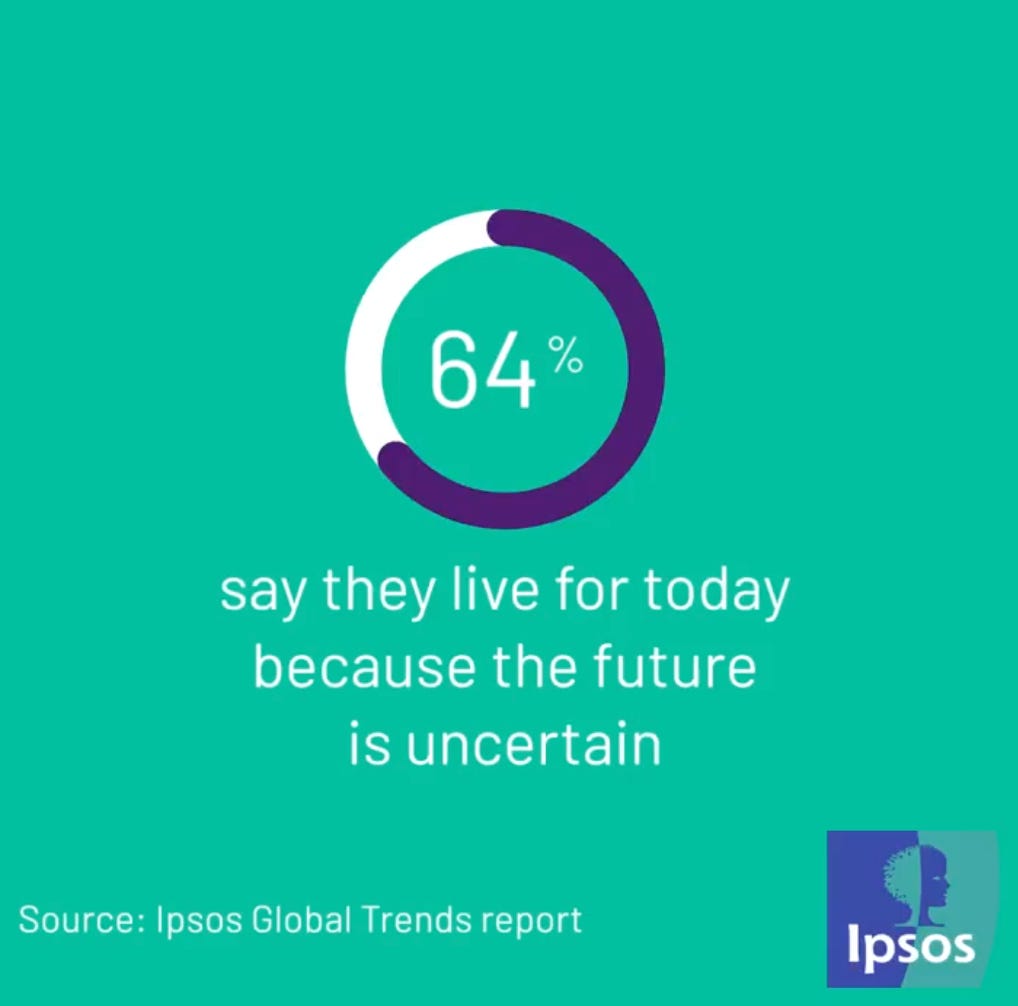
“This is the YOLO economy, where people that can are focusing on the moment because planning for a future requires near-infinite discounting due to perceived maximal uncertainty.”
The new YOLO is about actually being in them.
YOLO was fundamentally individual.
You only live once - you, singular.
The new version of YOLO is communal. People are protecting experiences that require other people. The run club. The roundtable in Austin. The festival where you lock your phone away and talk to strangers.
The brands building those spaces right now are the ones people will remember in 2027 and the future.
Thanks for reading,


There‘s a new article on jetzt.at, supporting your thoughts. https://www.jetzt.at/artikel/sWxlyOPT-m5Uu870u-42045
And if I think about things I own and love, in reality it’s the feeling that they trigger in me, what makes me happy.
Great one Florian. The running clubs have been so much on my (marketing) mind that this whole spring I hosted my own, and it was one of the most rewarding experiences ever. And as you mention it this weekend I am going to a festival in Paris (Cercles) that is completely phone free. Because YOLO!