

Hi 👋 I’m Florian Schleicher. This is the FutureStrategies newsletter. Thank you so much for reading along 💚
Almost all strategies, concepts, and projects start with a workshop. Since 2008, I’ve led more than 150 workshops – from 2-person core teams to events with 50 participants. From strategic to operational.
Sometimes full of inspiration, sometimes laser-focused on outcomes. Sometimes for leadership teams seeking direction, sometimes for experts exploring new ways of working.
I love workshops.
And more and more often, I get the question:
“What makes a workshop truly great?”
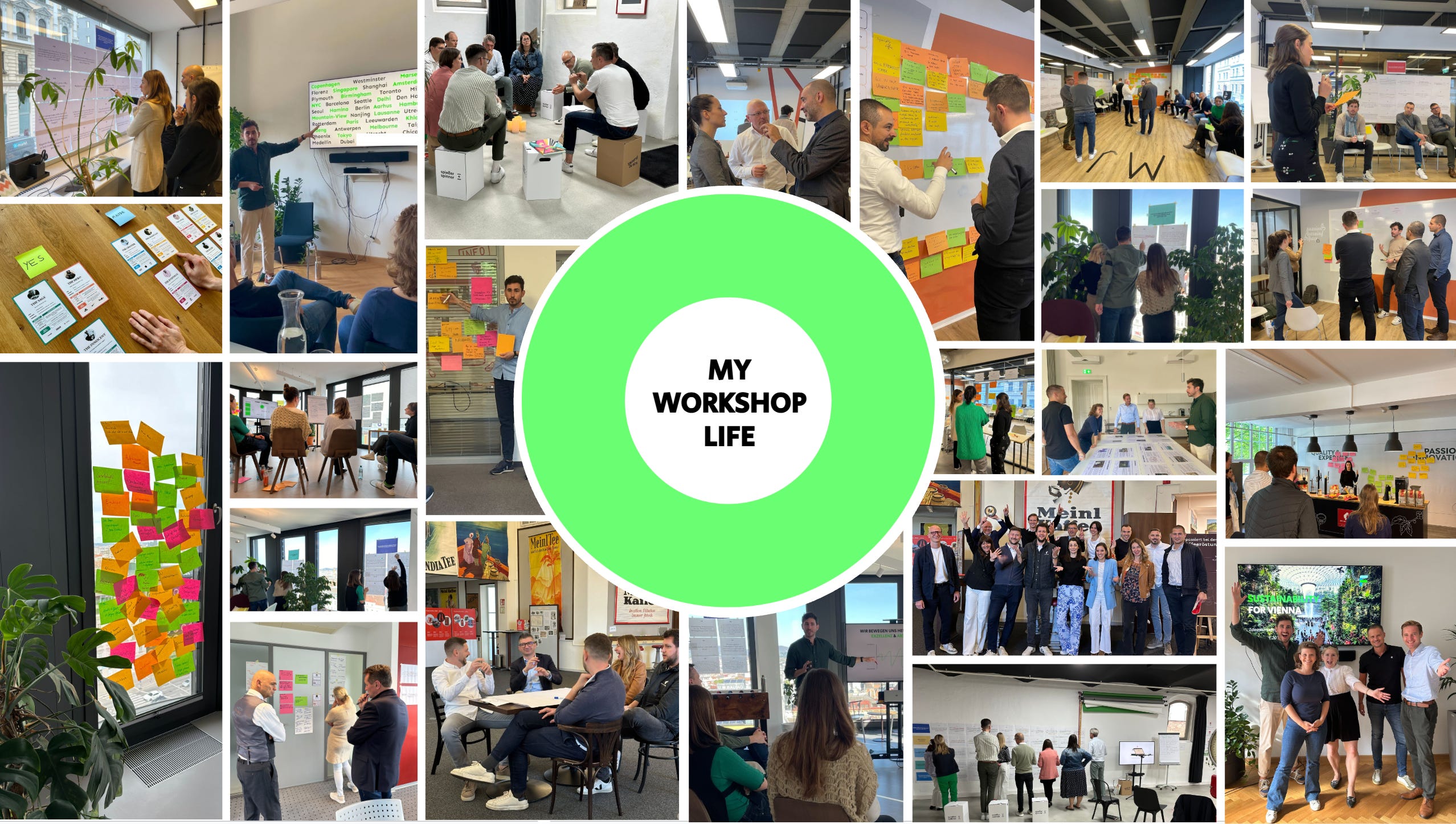
So today, here’s this special post about workshops.
Full of learnings, observations, and methods.
Let’s start with this:
A perfect workshop doesn’t feel like work — it feels like a collective awakening.
For me, there’s no such thing as a “perfect” format. The art lies in creating spaces that make exactly that possible. And it all starts with one central insight and a lot of intentional craft.
So today, we’ll look at:
1️⃣ What makes a workshop perfect?
Then we’ll dive into the three core phases of my workshops:
2️⃣ Entering
3️⃣ Centering with lots of methods
4️⃣ Exiting
And finally, a few practical tips:
5️⃣ Your next step
💎 What is a (perfect) workshop?
The key question at the beginning of a perfect workshop is: What do we want to achieve?
Each of my workshops is structured differently, because it depends on the kind of future we’re working toward.

Over the years, I’ve tested countless methods – but it wasn’t until I developed my own model that my workshop design became truly strategic:
The Focus Map.
A visualization and decision-making matrix that helps us create the most energizing workshop format for our organization and team. The Focus Map helps us identify which of the five key forces we want to bring to the forefront of the workshop.
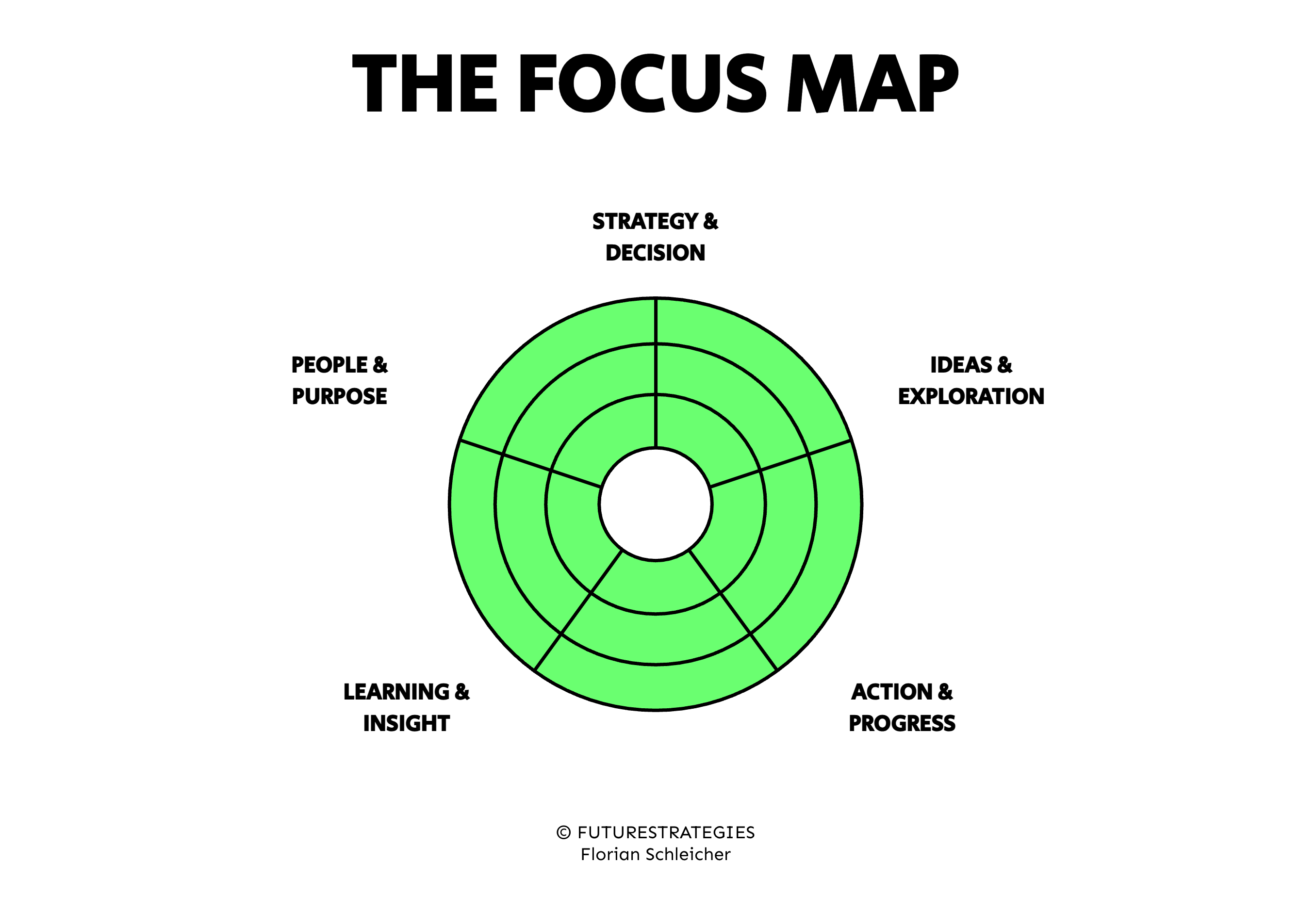
Together with my clients, I use this to find out what they really need.
Do we have the right problem?
The question sounds simple, but it’s often the biggest lever for real impact. In many cases, the problem exists in my clients’ minds but hasn’t yet been clearly defined.
That’s why my role as a consultant and strategist is to take a closer look right there.
“We are hired to begin at the beginning. Like the medical professionals that our four-phase model of diagnose, prescribe, apply and reapply suggests, our highest value offering is our ability to bring new perspective and understanding to our clients’ problems.”
Blair Enns, The Win Without Pitching Manifesto
Workshops that start with a fixed solution in hand feel like obligatory appointments. Workshops that start with genuine curiosity about the problem generate energy.
Together, we uncover possible problems the workshop can solve and then define the core problem we want to focus on:

That’s why I never start by asking: “How do we solve this?” but rather:
“What do we want to build?”