♟️ Marketing Strategy without Bullsh*t
Most marketing strategies fail because they play no role in everyday life. They sound clever, look good and change nothing. Here, I show you my approach to strategies that actually work.
Hi 👋 I’m Florian Schleicher. This is the FutureStrategies newsletter. Thank you so much for reading this 💚
For 18 years now (wow, I feel old writing that), I have been working on marketing strategies and have had the privilege of designing concepts and workshops for some of the world’s biggest brands.
From McDonald’s, the world’s largest burger joint, to the NGO Greenpeace, the car brand Opel, the food retail chain SPAR and many more, before joining the start-up Too Good To Go as Head of Marketing.
Now I have been an entrepreneur with my own marketing studio FutureStrategies for four years. And while running my practise, I have noticed one aspect that is not handled properly in most companies or even by agencies.
➡️ Most marketing strategies fail because they play no role in everyday life.
Everyone has an image of “strategies” in their mind.
A definition. Perhaps even a course of action.
But most of the approaches I see in practice are
a) complex
b) intellectual
c) fluffy – in other words, shallow
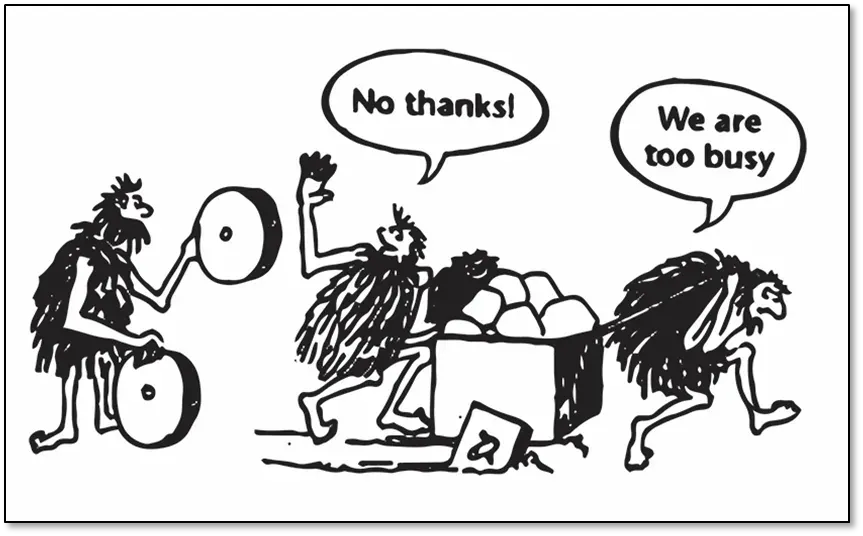
That’s why many strategies get stuck in presentation mode. They never make it to implementation. They are not really put into practice. They sound good, but are not practically useable.
Complexity is often just ambiguity in disguise.
So today I would like to share my strategic approach as a model. It consists of a mix of other models such as:
The Strategic Kernel
The Limbic Map
The Future-Back Approach
The Brand Archetypes
✴️ The Strategic Flow
One model. A hundred names.
When I develop marketing strategies or design workshops, I use this model because it is simple, tangible and practical.
I am a big fan of Richard Rumelt’s strategic approach, which he calls “the Kernel”. For my own modified model, I work with three steps:
Diagnosis
Guidelines
Actions
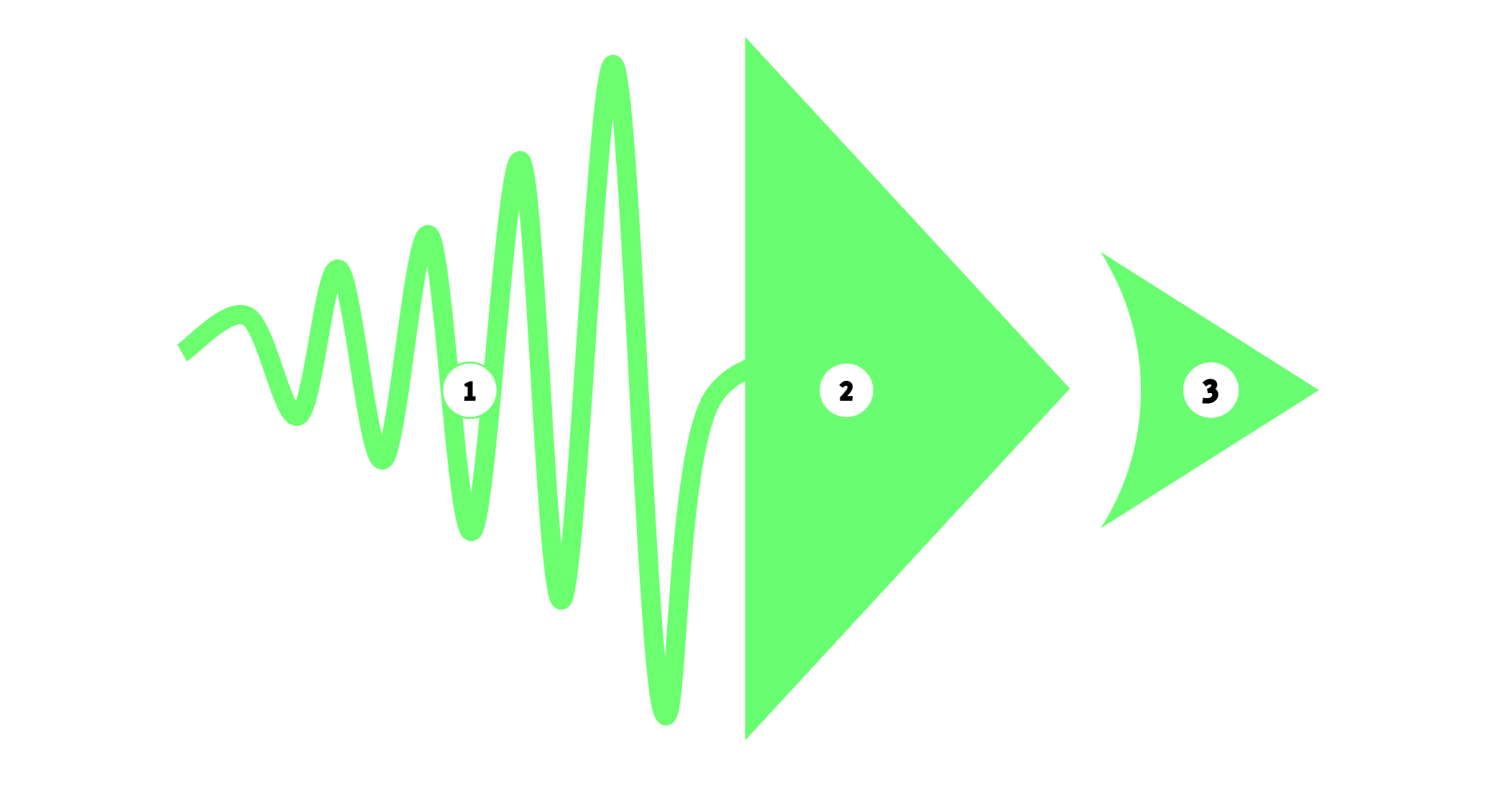
These three are complemented by two further aspects to really bring them to life:
Skills
Resources
1️⃣ Diagnosis
Strategy without diagnosis is wishful thinking with KPIs.
Most mistakes – whether made by large corporations, policymakers or start-/scale-ups – happen because people start by defining goals or actions. But the task of a strategy – and therefore of a strategist – is to start with the problem.
Or as Albert Einstein said:
“If I had an hour to solve a problem I’d spend 55 minutes thinking about the problem and 5 minutes thinking about solutions.”
At the Oracle of Delphi, the place where the ancient Greeks came to seek guidance about their future, it was written in large letters: Gnothi seauton. Know thyself!
Not as a question. But as a basic prerequisite.
First, we need to know who we are, who our target audience is, what problems we want to solve, and what shapes our market.
“Strategy does not start with what shareholders want, or what ‘core capabilities’ we have. It starts with a profound appreciation of and fascination with customers, and a deep desire to make their lives/businesses better off.”
Roger Martin
I work on this diagnosis in my projects across five levels:
a) Human Needs
First, we need to understand what drives our target audience. In “Decoded: The Science Behind Why We Buy”, Phil Barden describes three basic needs: excitement, autonomy and security, or the pursuit or avoidance of these.
For example, BMW stands for driving pleasure. Mercedes stands for superiority. And Volvo stands for safety.
b) Our Current World
Then we turn our attention to the reality of life for our target group:
What attracts people’s eyeballs, thoughts and hearts wander today?
What patterns shape the possibilities for communication, culture and trade?
What is currently at the centre of our world and gaining significance?
This is the meta-context in which our marketing will operate. And this context is currently characterised by extreme content overload. If we do not take this into account and accept it in our strategy, nothing will work.
Depending on consumer groups and market conditions, there are also other patterns and trends that may play a role.
I highlighted and analysed four major changes in my latest trend report, FRICTION RELOADED – Marketing Trends 2026.
c) Individual Context
Once we have understood the big picture, we need to filter out the following:
What “job” are we being hired to do?
At what point in time?
Against what real alternatives?
In other words: What is the insight behind decisions?
For example: Why do people buy a milkshake at McDonald’s in the morning?
Or: Why do people buy expensive motorcycles?
“Harley-Davidson sells to 43-year-old accountants the ability to dress in leather, ride through small towns and have people be afraid of them.”
John Russell, European Managing Director of Harley-Davidson
d) Changing Behaviour
Now that we know why people would buy our products or services, we need to understand how we can change their behaviour.
To do this, we first need to understand one thing:
People don’t like change.
We are biologically conditioned (at least most of us) to perceive change as dangerous and threatening.
Our brains are lazy.
TL:DR: We need to engage consumers both cognitively and emotionally. After all, 95% of purchasing decisions are made on an emotional basis.
e) Our Brand and Role
The final part of the diagnosis revolves around the question:
What value do we bring to people’s lives and what is the most important thing we can do for them?
Our brand is important, but only if we take our customers’ perspective into account. This final step must be grounded in reality. We are still in the diagnosis phase. This also includes some hard truths.
Or as my friend Carl-Emil Jensen, Head of Creative & Brand at Too Good to Go, once said to me about his own brand:
“No one wakes up at 7am in the morning and decides ‘Today I want to save some food with Too Good To Go.’”
2️⃣ Guidelines
Strategy without priorities is merely decoration.
Once we have understood ourselves, our brand, our customers and our environment, we move on to the second step in the strategic flow: the guidelines.
This involves defining where our marketing should take us. What we want our brand to stand for. How consumers should think and feel about us.
I always start at the top of this pyramid and derive the brand’s personality, goals and OKRs from the vision.
🔑 Vision
Just as the North Star once guided sailors to their destination, our vision guides us to our goal. A vision is an inspiring, optimistic, bold and motivating statement about where our brand/marketing/project should take us.
This can also be visualised to make it even more tangible and understandable, as in this example from Oatly.
⭐️ Personality - Brand Archetypen
To get to the personality of a brand or project, I like to work with the brand archetype model.
What we want to find out is the human side of the brand: language, behaviour and energy. Personality shapes how our vision works in practice. It makes our brand recognisable at every touchpoint.
This works best with an outside-in approach. So what feelings and thoughts do we want to trigger in our customers?
And then we transfer that to one of the 12 brand archetypes, as outlined in “The Hero and the Outlaw” by Margaret Mark & Carol S. Pearson.
Another model I like to work with when it comes to personalities is the Limbic® Map, which divides emotions into three clusters. It was developed over the last 20 years by the German research group Gruppe Nymphenburg and is based on findings from various disciplines, including neuroanatomy, evolutionary biology, neurochemistry and psychology.
The Limbic® Map shows human motives, desires and values in their interrelationship with each other. This allows brands and products to be directly located and then a personality to be designed.

🎯 Objectives & OKRs
IIn the final step of the guidelines, we translate our emotional orientation into concrete progress signals that keep us on track. We want to combine inspiration with responsibility.
After all, marketing must deliver measurable results.
Otherwise, it’s just a hobby.
Focus is particularly important here, otherwise the project or brand will be pulled in too many directions. Or as Bob Iger, CEO of the Walt Disney Company, describes it:
“Priorities are the few things that you’re going to spend a lot of time and a lot of capital on. Not only do you undermine their significance by having too many, but nobody is going to remember them all. You only get three.”
What we measure defines our direction.
3️⃣ Actions
A strategy without anchoring is just a document.
Now we come to what is obviously the simplest point, but one that is often misunderstood: actions.
The measures we take to make our strategy visible.
We return to our vision. Then we ask ourselves:
What would need to be true for our vision to become reality?
To lead brainstorming sessions, I write down three states that we need to achieve. Then we connect them again at the top and form clusters underneath, as in this example:
However, when it comes to strategies, one essential aspect is often overlooked:
The inward-focused actions.
And that is precisely the key to operational strategies that work and are put into practice.
“Strategy is nothing without action. Anyone who says otherwise is stuck on their own intellectual ivory tower.”
Rob Estreitinho
We need to define answers to questions such as:
How do we integrate our marketing strategy into our ongoing meetings?
What does it mean for our briefings?
How is it reflected in performance reviews?
Can we make the strategy visible in our everyday work/in our office?
If we don’t embed the strategy on a monthly, weekly or daily basis, it will disappear into a drawer along with the strategy paper, and then all the work will have been for nothing.
Because in the hustle and bustle of everyday life, one thing in particular happens: content is forgotten.
Once we have clearly defined all three steps, two uncomfortable questions arise.
4️⃣ Do we have the right skills to implement this strategy effectively?
5️⃣ And do we have the resources to see it through consistently?
Most organisations do not fail because of a lack of insight. They fail because of a lack of strategic practice.
If one of the five steps is missing, a problem arises.
If all five steps are covered, we achieve strategic progress.
But even the best strategy will fail if teams don’t know how to apply it in their day-to-day work. That’s why I work on strategies and on integrating strategic thinking for marketing teams.
I host and lead strategic training sessions to empower CMOs and marketing teams to set priorities, create focus and consistently implement decisions.
Tailored to the each brand, organisation and situation.
✴️ The Strategic Flow - TL:DR
Most strategies fail not because of a lack of intelligence or skills within the team, but because of overload.
Too many goals. Too many measures. Too few decisions.
Strategy only works when diagnosis, guidelines and actions are clearly linked.
And when skills and resources are available across the entire team.
Without clarity, every budget goes up in smoke.
“Strategy is not about adding more and more stuff. Strategy is about taking stuff away. Taking away everything, until there’s only one thing left. One single powerful thought.”
Dave Trott
Strategic progress comes from ruthless reduction.
In the end, only what works remains: Marketing strategies without bullsh*t.
Thanks for reading,


![Decoded - The Science Behind Why We Buy [Speed Summary] - Brand Genetics Decoded - The Science Behind Why We Buy [Speed Summary] - Brand Genetics](https://substackcdn.com/image/fetch/$s_!GV-h!,w_1456,c_limit,f_auto,q_auto:good,fl_progressive:steep/https%3A%2F%2Fsubstack-post-media.s3.amazonaws.com%2Fpublic%2Fimages%2F225e962b-12d1-4c81-8796-8ec340e1929d_1030x736.png)


