🤖 AI Is Making You Worse at Your Job
AI is currently making most managers worse at their actual job. Why I am looking forward to the beautiful AI backlash in marketing. Plus: The one habit that protects your edge, now.
Hi 👋 I’m Florian Schleicher. This is the FutureStrategies newsletter. Thank you so much for reading along 💚
Okay, let’s take a deep breath.
I’ve been thinking a lot about AI in the last weeks.
And I am fucking bored of what I currently see.
Because one thing get’s left out in most discussions, videos, podcasts, speeches: If you work in marketing and have a lead role, your actual job is judgment, and judgment is the one input no current LLMs can supply.
The only thing AI really produces is just quantity out of mediocrity.
A couple of weeks ago, I posted on Linkedin that I would unfollow everyone who writes their postings with AI. It was my second most viewed post this year:
Some people then told me “You are just anti AI.”
I am not.
I use it daily in work and life. I run research studies with it, I draft with it, I use it to pressure-test arguments and critique me. I also use it to research vacations, find new recipes or find a new printer for my office.
But the closer I work with these tools, the clearer it becomes to me what they are doing to the people who lean on them.
Whenever we lean too much on something, we lose something.
And when the pendulum swings into one direction, it always swings back.
Now we have the first psychological data on what the over-reliance does to our capabilities, and the first cultural signs of where it goes next: the early glimpses of an AI-backlash that ends the day it stops being the story and simply becomes normal.
So today, let’s look at the risks of marketeers and brands using AI. At what skills you will need in this beautiful post-hype-future. Because when AI becomes normal, it becomes infrastructure, and infrastructure does not differentiate anyone.
1. What you’ve already noticed
Every keynote is now about AI.
Every podcast.
Every newsletter (including this one).
And then you close the laptop and most of the actual work looks the way it looked two years ago. The volume of the conversation and the size of the change in the average day have come apart:
The first sign is the feed: By the end of 2024 already more than half of long-form LinkedIn posts were AI-generated. Just in May 2026 Linkedin itself is now moving to limit the reach of AI-generated postings, and user fatigue and a demand for more human content are reshaping what gets seen. The posts all sound the same, the comments sound like the posts, and it is just fucking boring.
The second sign is young people: In May 2026 the graduating classes booed speakers who praised AI: Eric Schmidt at the University of Arizona, the University of Central Florida speaker who pitched it as the next industrial revolution, the one at Middle Tennessee State.
“Gen Z, despite being more familiar with AI, is the most pessimistic about jobs, with 81% saying that AI will decrease job opportunities. People are not rejecting AI, but people are asking questions now since the initial AI fever is gone.”
Chetan Jaiswal, Department of Computing at Quinnipiac
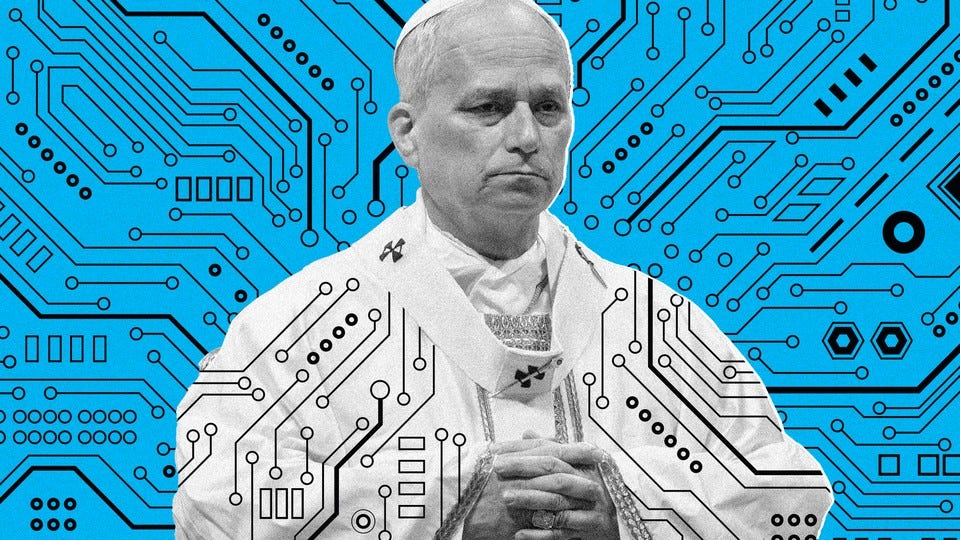
Even Pope Leo XIV used his first encyclical to call for AI to be “disarmed.” (This is especially interesting when we consider that religion has a little bit of a comeback - especially with young men).
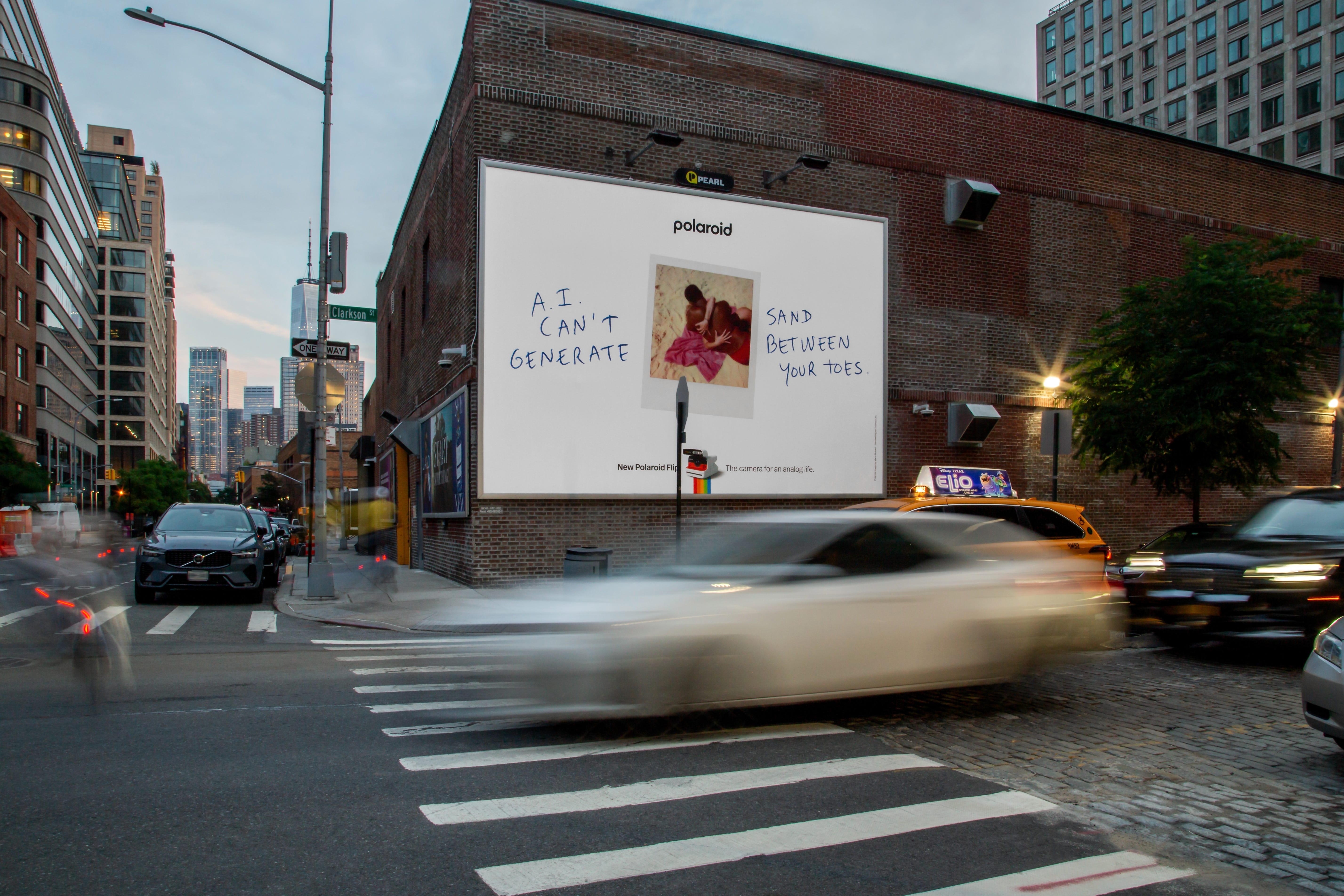
The third sign is about your work: Brands have started to advertise the absence of AI as the product. Dove committed to never using AI to represent real women. Polaroid put billboards next to the Apple and Google offices reading “AI can’t generate sand between your toes.”
Aerie’s pledge to use real people only became its most-liked post in 2025. Meanwhile the AI-made ads, from Coca-Cola, Gucci to Toys R Us and LEGO got called soulless in public.
Merriam-Webster made “slop” its 2025 word of the year. And not without reason I called one of the overarching trends of 2026 in my marketing trend report FRICTION RELOADED “Slop Machines”.
But the most urgent thing is something that you and I and most marketers around us feel at this moment:
Everybody is a little tired.
2. What the first data shows
That feeling also translates into a shape: Gartner’s 2025 Hype Cycle puts generative AI in the Trough of Disillusionment, already past its peak, while AI agents have taken its old spot at the top of the curve as the next thing to be oversold.
Why is the AI hype already slowing down?
MIT’s NANDA initiative studied enterprise AI and found that 95% of organizations saw no measurable return on $30 to $40 billion in spending.
The detail that should make us all pause:
The budgets skewed toward AI implementation in sales and marketing, the functions where the return on investment was lowest.
The even more uncomfortable data is about ourselves. Microsoft and Carnegie Mellon surveyed 319 people who use AI at work and found a clean split:
Higher confidence in the AI caused less critical thinking.
The people least sure of their own thinking hand over more tasks to AI.
The people who trust theirs challenge the output.
What this means for you as a marketeer?
The more you lean on AI to do your thinking the more you stop practicing the thing, the way a muscle you stop using gets weaker.
The same study found people working with AI produced a less diverse set of answers to the same task. That just makes sense. Because if everyone is pointing the same tool at the same problem we all arrive at the same middle.
If we outsource what we love most about our work, then why even work?
I love building strategies, creating engaging workshops, advising my clients about challenging situations. If I were to outsource all of that, then I would miss so much joy in my work.
So here is the risk in one line.
AI is confidently average, and it slowly turns the people who depend on it into confidently average versions of themselves.
All models are trained on what was already written, said, and done. It is very good at the consensus and structurally blind to the asymmetric read, the brief everyone agrees on that is quietly wrong, the insight that sounds strange right up until it is obvious.
Good marketing has always lived in that gap. A tool trained on the past optimises for the average of the past, and the average has never won anyone a category.
Real world-class marketing is still done by real world-class people.
One more critical thought:
Last week I’ve read that a fellow strategist created a “Whetstone” to help her create an AI version of herself and her tone of voice. She writes about her process to end up there and I got curious. Does this really work?
But when I read what she wrote, I immediately just felt… nothing. “Her” output had so many typical AI phrases in it. The “it’s not this, it’s that” constructions. The short sentences. The familiar rhythm.
I still think she’s an exceptional strategist.
But I subscribed to her content because I wanted her voice. Not an AI-retouched version of it.
Maybe that’s the paradox.
The more AI makes us sound alike, the more valuable original voices become.
And given the data, I suspect many people feel the same.
“My guess is we’re at, or close to, peak AI hype. I think it’s safe to start planning your post-hype lifestyle.”
Paul Ford, Aboard
3. What happens when AI gets boring
I am an optimist. So am I not worried about the AI backlash in marketing. I am actually looking forward to it.
Because a backlash is a signal: When people boo an AI-keynote, unsubscribe from the AI-retouched newsletter, and put “made by humans” on the packaging, they are telling you where things are going next.
Every general technology runs this same curve. The Princeton researchers Arvind Narayanan and Sayash Kapoor make the case that AI is no different from electricity or the internet, transformative and entirely normal at the same time, and that its real payoff arrives only once it stops being a marvel and diffuses quietly into the actual work.
The boring phase is the good phase.
You already know what happens to an advantage once everyone has it.
Email stopped making anyone a better manager the moment every manager had email. Powerpoint did the same. Photoshop as well.
So when every brand, every marketeer has the same model writing the same competent copy, the model is worth nothing anymore.
Narayanan and Kapoor draw a clean line between the information work AI absorbs, the summarizing and the first drafts, and the judgment, reasoning, and interpretation it cannot. That second category was always the expensive part of our job in marketing.
Yes, we might use AI for simple legal advice. We ask it about interpreting our blood test results. We research printers for our home-office.
But if we get sued, we would still call a lawyer. If we are sick, we would still consult a real doctor. And if we buy something for our whole company, we would still ask an expert.
And if your brand has a real challenge, you want to outsmart the competition and conquer a new market and audience, you still call an experienced marketer and strategist.
The parts of your job AI can take are mostly the parts you did not love anyway. Like the deck nobody reads, the status update you write every Monday.
But the things you love about your job (and for me sometimes telling a client the thing they did not want to hear) are getting rarer and more valuable every time someone else outsources them.
That being said…
4. Your next move
AI is making most managers worse at judgment right now. That is the risk, and it is also an opening, because judgment is about to be the rarest thing in the room and (if you are good) you already have it. You just have to keep using it.
Do your own thinking first.
I know it’s tempting to start using AI straight away. But it makes us dependent on it and results in mediocre output.
Form the take, make the call, create the posting, write the rough version in your own words, then bring AI in to sharpen and to argue with.
The people who keep their judgment are the ones who think first and reach for the tool second.
The hype will keep getting louder for a while, and then one day it will go quiet, the way it always does. That quiet is the best thing that could happen to people who are good at this. I am looking forward to it. You should be too.
We will be able to listen to podcasts without AI mentions again.
Enjoy keynotes about new topics.
And then the party will be over:
“And then it’s like Times Square the morning of January 1: Everyone has gone home and there’s confetti everywhere and people pushing brooms. I have never been to Times Square for New Years Eve, because it seems terrible. But I love going to Manhattan the morning after—especially on the earlier side—and walking around. Everything is emptied out: You have the whole city to yourself. And you can look around and think about how you want the next year to go.”
Paul Ford, Aboard
Thanks for reading,


